
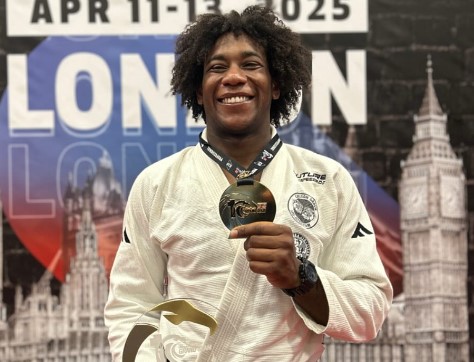
Uanderson Ferreira
Address
Rio de Janeiro, Brazil
Phone
About Us
Uanderson Ferreira was born on January 10, 2001, in Rio de Janeiro, Brazil, growing up in the Morro do São João (Engenho Novo), a favela (slum) located in the northern territory of Rio.
Naturally drawn to sports, Ferreira maintained a healthy dose of physical activity from his early childhood, with football (soccer) and capoeira being his favorites, and the ones he trained more diligently.
By the time Uanderson turned 8, his parents decided to add jiu-jitsu to his list of hobbies. The favela streets were a breeding ground for crime, even for young kids, and it was their intention to keep Ferreira as busy as possible and away from gang violence while they were at work.
Marcio Carreira was Uanderson’s first instructor and an instrumental figure in Ferreira’s upbringing as he immediately recognized the talent in his student and incentivized the young Rio native to focus on his jiu-jitsu as a career choice. It was also coach Carreira who used his influence to help Uanderson move to the United Arab Emirates (UAE) as a blue belt, a country where his student could live off the sport, as a professional athlete. Once in the Middle East, Ferreira joined the Commando Group, one of the top jiu-jitsu teams in the country, where he worked closely with Thiago Barreto, Bruno Barreto, and Igor Silva.
In February 04, 2023, Uanderson Ferreira was awarded his black belt from the hands of Marcio Ferreira.
UANDERSON FERREIRA’S GRAPPLING RECORD
Traditionally, when displaying an athlete’s competitive record, BJJ Heroes has only accounted for matches that took place in the adult black belt division as this category symbolizes a competitor’s professional career in our sport. Uanderson, however, started competing at the black belt (professional) level from the moment he conquered the AJP Abu Dhabi World Pro tournament as a brown belt, in November 2021, before being promoted to the actual rank.
According to the rules stipulated by the AJP (Abu Dhabi Jiu-Jitsu Pro League), a colored belt athlete who wins the federation’s World Pro event can no longer compete in this federation in that particular belt rank and is required to move up. Meaning: if a blue belt wins the World Pro championships he or she will, from then on, have to compete in the purple belt. The same concept is applied across all ranks up to the black belt, i.e.: if a purple belt wins the WP, he or she must compete in the brown belt division, and so on and so forth. These events are rare, as the majority of people who win the AJP’s biggest tournament are more often than not, immediately promoted by their coaches. Ferreira, however, remained a brown belt while competing against black belts. Considering those he competed against during this period, and the important wins he had doing so, we have opted to include those matches in his record.